Best Skin Care Routine For Combination Skin: 7-Step Guide
The best skin care routine for combination skin balances oil and hydration for T-zone and cheeks.
I’ve worked with many skin types and tested routines for years. This guide gives clear steps, product tips, and mistakes to avoid for the best skin care routine for combination skin. I explain why each step matters and how to adjust for your oily and dry zones.
Understanding combination skin
Combination skin shows both oily and dry areas at the same time. The T-zone (forehead, nose, chin) often gets shiny and clogged. Cheeks and temples can feel tight or flaky. Knowing your pattern helps build the best skin care routine for combination skin.
Start simple and pay attention to how your skin reacts. Track changes with seasons and hormones. That way you can tweak products and steps without overdoing anything.

Core principles for the best skin care routine for combination skin
Treat zones, not the whole face the same way. Use lightweight, non-comedogenic products on oily areas. Add richer hydration where skin is dry. Keep routines short and consistent to avoid irritation. These principles guide every product choice and step.
Balance is the goal. Over-drying leads to rebound oil. Over-moisturizing clogs pores. A targeted routine stops both problems and creates healthier skin over time.

Morning routine: step-by-step
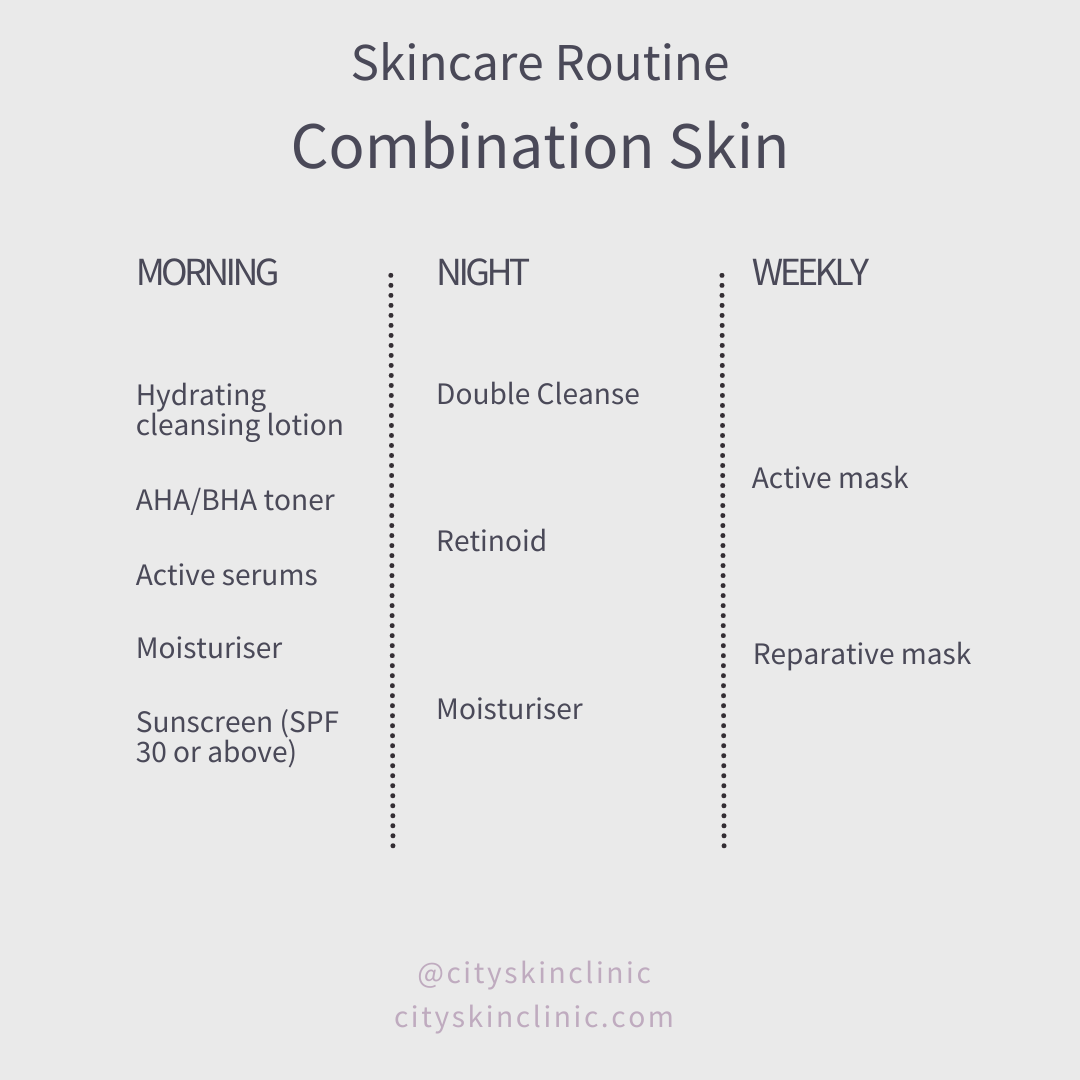
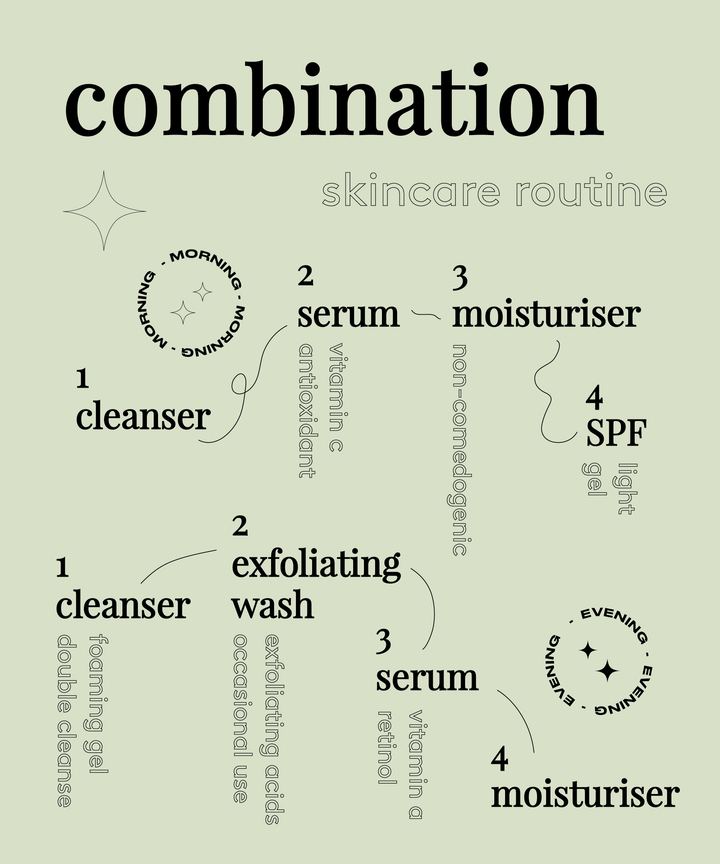
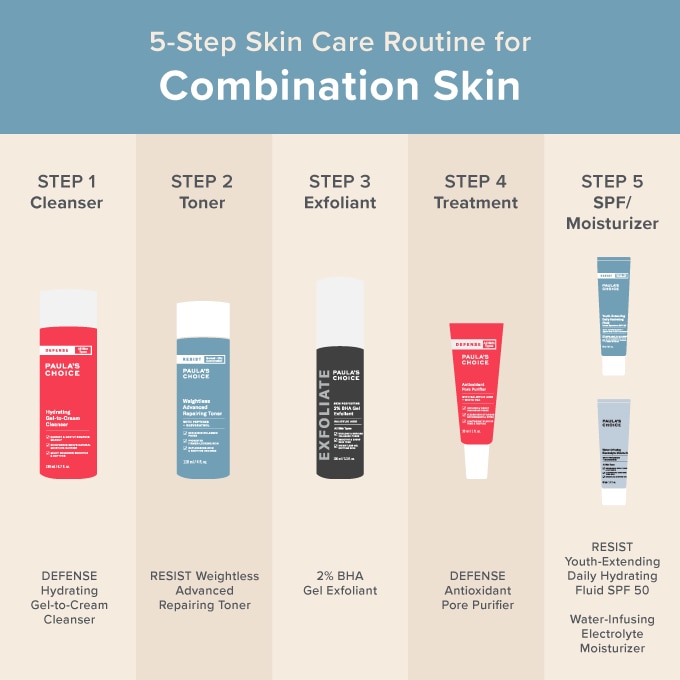
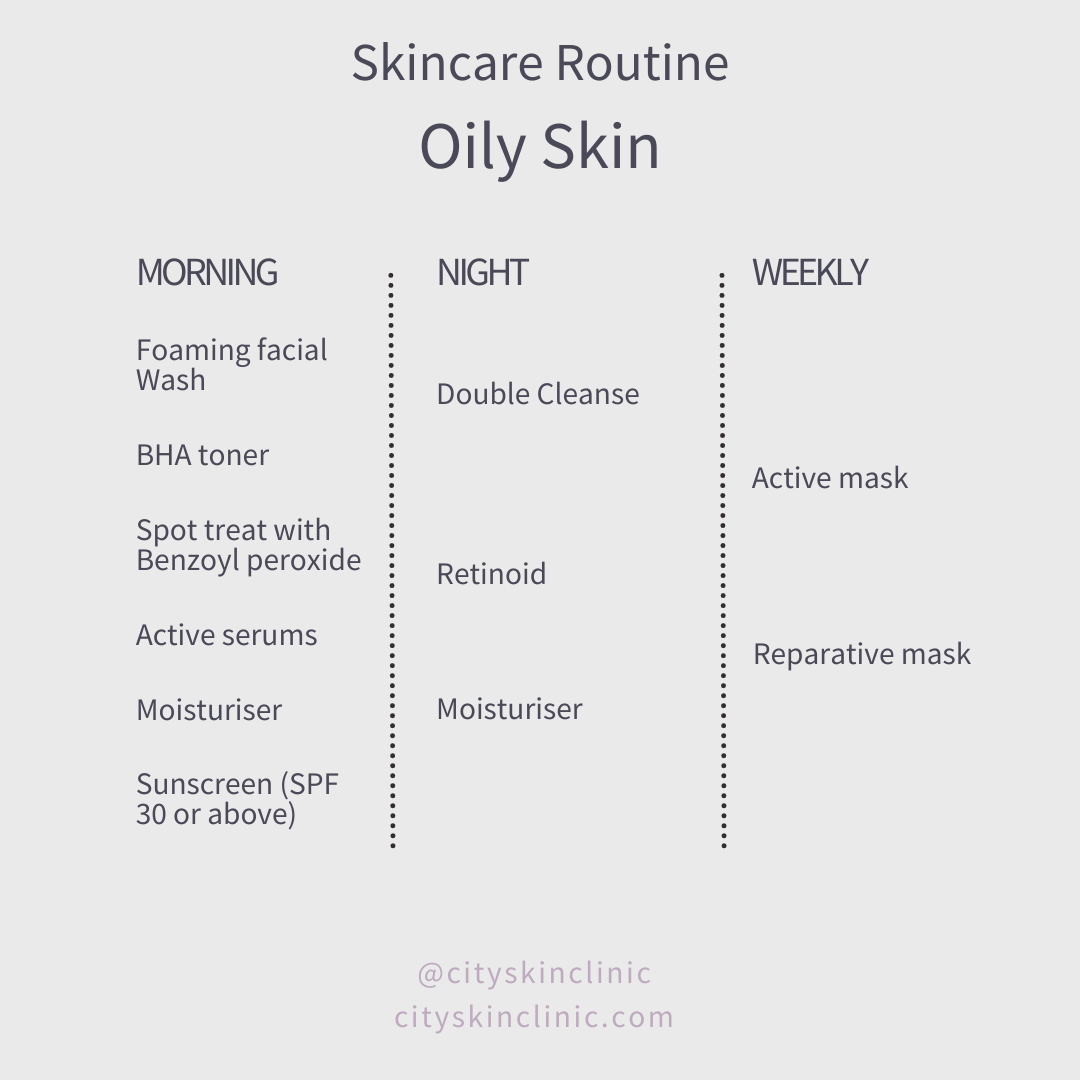
- Cleanse with a gentle gel or cream cleanser. Use lukewarm water and a soft touch. This removes overnight oils and sweat without stripping.
- Apply a water-based toner or hydrating mist. Focus on dry areas and skip alcohol toners. This adds light hydration and preps skin.
- Use a lightweight serum with hyaluronic acid for hydration. Apply to the entire face but pat into dry cheeks and temples.
- Spot-treat oily zones with a niacinamide or salicylic acid serum if needed. Use small amounts on the T-zone to reduce shine and pore congestion.
- Moisturize with a gel-cream or lotion. Choose oil-free formulas labeled non-comedogenic. Apply more to cheeks than to T-zone if needed.
- Finish with a broad-spectrum sunscreen SPF 30 or higher. Use a non-greasy formula. Reapply if you are outdoors.
Follow this simple morning plan to keep oil in check and hydrate dry areas. It forms the foundation of the best skin care routine for combination skin.
Evening routine: step-by-step
- Double-cleanse if you wear makeup or sunscreen. Start with an oil cleanser to dissolve products, then follow with a gentle gel cleanser. This prevents clogged pores while keeping hydration.
- Use a treatment toner or chemical exfoliant 2–3 times a week. Pick a low-strength BHA (salicylic acid) for oily areas to clear pores and a mild AHA for dry patches if needed.
- Apply targeted serums. Retinoids at night can help texture and breakouts. Use lower strength and build up slowly.
- Hydrate with a richer night cream on dry zones and a lightweight layer on oily areas. You can mix products: dab the richer cream on cheeks and a light gel on the T-zone.
- Add spot treatments only where needed. Avoid full-face acne creams unless prescribed.
A calm, consistent evening routine is key. It lets active ingredients work without triggering excess oil or dryness.
Weekly and monthly extras
- Exfoliate gently once or twice a week. Use a chemical exfoliant for oily zones and a mild scrub only on rough patches when needed.
- Use clay masks on the T-zone once a week to draw out oil. Follow with a hydrating mask on cheeks.
- Use a sleeping mask or richer treatment on dry skin when weather is cold or during travel.
- Schedule a monthly check of products. Rotate or pause items that cause irritation or breakouts.
These extras enhance the best skin care routine for combination skin without overloading it.

Ingredients to look for and avoid
Look for:
- Hyaluronic acid for light hydration.
- Niacinamide to regulate oil and improve texture.
- Salicylic acid for pore-clearing on oily zones.
- Lightweight ceramides to restore barrier on dry areas.
- Broad-spectrum SPF for sun protection.
Avoid:
- Heavy oils and butters that clog pores in the T-zone.
- High-alcohol toners that strip and trigger more oil.
- Harsh physical scrubs used too often.
- Overuse of strong actives that cause irritation and imbalance.
Choosing the right ingredients helps you build the best skin care routine for combination skin with fewer mistakes.

Personal experience, common mistakes, and practical tips
I once used a single heavy moisturizer for all zones. My T-zone broke out and cheeks still felt dry. I then split products by area and saw improvement in weeks. Learn from that: treat zones, not the whole face.
Common mistakes:
- Over-washing to control oil, which increases sebum production.
- Using strong drying products across the face.
- Skipping sunscreen due to fear of greasiness. There are matte sunscreens for you.
Quick tips:
- Layer thin products rather than thick ones.
- Patch test new actives on a small area.
- Adjust routine seasonally—lighter in summer, slightly richer in winter.

How to choose products based on your skin pattern
If T-zone is very oily and cheeks very dry:
- Use a gel cleanser and salicylic acid on the T-zone.
- Use a creamier moisturizer on cheeks.
If oiliness spreads after using heavy creams:
- Switch to non-comedogenic formulas.
- Try oil-control primers or mattifying serums for daytime.
If sensitivity flares:
- Reduce active use to once or twice per week.
- Focus on barrier repair with ceramides and gentle hydration.
These choices help tailor the best skin care routine for combination skin to your unique pattern.
Frequently Asked Questions of best skin care routine for combination skin
How often should I exfoliate with combination skin?
Exfoliate 1–3 times a week depending on tolerance. Use BHA on oily zones and gentle AHA on dry patches if needed.
Can I use retinol on combination skin?
Yes. Start with a low concentration and use it 2–3 nights a week. Apply moisturizer to drier areas to reduce irritation.
Is it safe to use two moisturizers at once?
Yes. Use a lightweight gel on oily zones and a richer cream on dry cheeks. Layering helps balance both needs without clogging pores.
What sunscreen works best for combination skin?
Choose a non-comedogenic, broad-spectrum sunscreen labeled for oily or combination skin. Gel or fluid formulas often feel lighter.
Should I avoid oils entirely with combination skin?
Not always. Lightweight oils like squalane can help dry spots without clogging pores. Avoid heavy, pore-clogging oils on the T-zone.
Conclusion
A balanced, simple plan wins: cleanse gently, target oily zones, hydrate dry patches, and protect with sunscreen. The best skin care routine for combination skin is flexible and focuses on zones, not one-size-fits-all. Start small, track how your skin reacts, and adjust seasonally. Try the steps above for four weeks and note improvements, then refine from there. Share your results, ask questions, or subscribe for product recommendations and routine updates.